LiveZilla Live Help
McAfee SECURE sites help keep you safe from identity theft, credit card fraud, spyware, spam, viruses and online scams
Agave Nectar, Raw, Certified Organic, Net Wt. 11.5 lbs. (1 gallon)
Agave Nectar, Raw, Certified Organic, Net Wt. 11.5 lbs. (1 gallon) USDA Cert

Our Raw Agave Nectar is USDA Certified
Organic by ICS (International Certification Services).


Wilderness Family Naturals' agave is not a purified substance, such as high fructose corn syrup or white sugar. Our agave is non-GMO and it is certified organic.

Agave Nectar is a sweet concentrated syrup made from the Agave plant. It made by harvesting the "pina" which is a "pineapple-like" core from which all the leaves originate. The "pina" is stripped of its leaves, washed and then chopped into small pieces and soaked in purified water. After a thorough soaking, the fibers are removed and sent to make cloth and rope. The water that remains is full of inulin, a complex carbohydrate that is often used as a pre-biotic by the natural foods industry. This inulin water is allowed to incubate at 103 degrees for 4-5 days. Natural enzymes, which occur in the plant, break down the complex carbohydrates into two monosaccharides (simple sugars: fructose and glucose). No enzymes are added. No chemicals are used and no further processing is done. The inulin water is simply allowed to incubate at a steady temperature the same as if you were making yogurt. The last step in the process, concentration of the nectar, occurs solely by the use of a vacuum to remove excess moisture (water).

Wilderness Family Naturals' Certified Organic Agave Nectar is not heated during processing and it is considered raw. By contrast, Agave Nectar made by other manufacturers, is created using temperatures of 160-170 degrees F and the total manufacturing time is about 36 hours. Standard agave nectar is usually filtered heavily to yield a very light colored product with a mild taste. The lighter the color, the more the agave has been filtered. A manufacturer who claims to have raw, light colored agave is selling an agave that has been filtered many, many times to remove the participated substances which form during fermentation.

Wilderness Family Natural's Organic Agave Nectar is dark in color because it has the least amount of processing of any Agave product. Lighter Agave Syrups can be produced by faster processing (which requires temperatures of 160 degrees or more) and heavy filtering. Raw agave, sold by other suppliers, if light in color has been filtered many, many times. Repeated filtering removes flavor and color.

When we visited the manufacturing plant in Mexico we were offered 5 different" shades of agave to choose from. Each sample had a slightly different taste with the strongest flavors coming from the darkest agave. The difference in the shades came solely from the number of times the agave was filtered and the fineness of those filters. Wilderness Family Naturals' has chosen to purchase only the agave which sees the lowest temperatures and the least amount of filtering. That is why our agave is darker than others.

Wilderness Family Naturals' Organic Agave Nectar is dark in color because it has fermented naturally at low temperatures over many days and it is not heavily filtered. When we visited the plant where our agave is manufactured we had the option of 5 different "shades" of agave. Each different agave sample had a slightly different taste. The strongest taste came with the darkest colors and this was the agave that was the least filtered and the least processed. This is the agave that Wilderness Family Naturals chose to purchase.

Before visiting the plant ourselves, this type of information was unknown to us. However, we were able to monitor the process, ask numerous questions, and check quality control records, process logs, and look over the equipment. We are proud to tell you that our agave is coming from a new, state-of-the-art plant with very tight quality control. And we can give you our personal guarantee that our agave is raw and not heavily filtered or processed with added enzymes, chemicals or other materials. It is:

  • Completely natural - no chemicals or enzymes are added during processing, only natural fermentation and simple filtration.
  • Completely raw - no heat is used during processing.
  • Great for baking and cooking as well as raw dishes and has been used this way for thousands of years by the Mexican people.
  • Does not contain any chemicals, toxins, or preservatives.
  • 75% sweeter than sugar. fructose is 42 percent sweeter to the human brain than granulated sugar, less is needed to achieve the same level of sweetness

More Info
Qty in Basket: None
Code: AN1
Price: $44.00
Weight: 13.10 pounds
Inventory Level: In Stock
Quantity:


Customer Reviews
Average Customer Review:  2 Reviews
Write an online review and share your thoughts with others.
5 out of 55 out of 55 out of 55 out of 55 out of 5
Excellent Alternitive to other sweeteners, 4.17.2010
Reviewer: Robert (Silver Bay, MN)
5 out of 55 out of 55 out of 55 out of 55 out of 5
Love the flavor of this in almost anything that I use to use regular sugar in. Shakes are very nice with this instead of other sweeteners. I use this as my main sugar substitute but just like anything enjoy in moderation :)
Divine Agave Nectar, 2.19.2010
Reviewer: Maureen Balluff (Evanston, Il)
5 out of 55 out of 55 out of 55 out of 55 out of 5
This agave nectar is so much better than any I have tried so far. The flavor is caramel like and it's viscosity is so smooth .I'm hooked. It's divine!


Related Products
Code Name Price Availability Quantity


Additional Information

FAQ's

Frequently Asked Questions:

1. There have been statements made that Agave nectar is the same as high fructose corn syrup. Is this true?
    • High fructose corn syrup comes from purified corn starch. The process takes many, many steps, high heat and lots of filtering. The end result is a highly purified substance. There are three strengths/concentrations of high fructose corn syrup and they reflect the concentration of fructose percentages. ( 42%, 55% and 90%). Most HFCS sold is either HFCS42 or HFCS55. HFCS90 is predominantly used to make the 55% from the 42% concentration. High fructose is more economical to use than white sugar, even with all the processing, and that is why it has made it into our food supply and a predominant ingredient.
    • Honey, by contrast, is made from the nectar of a flower or the "sap" of the plant. It contains complex carbohydrates which the enzymes in a bee's stomach begin to break down into simple sugars. Once placed in a honey comb the enzymes continue to work and ferment the complex carbohydrates into simple sugars, predominantly fructose and glucose. The bees also fan the combs to drive the moisture out. When the honey is ready, they cap the honey combs off. This honey is now shelf stable at room temperature and it is what bee keepers harvest and sell. Many beekeepers heat their honey to make it flow better and to give it a longer shelf life. Some suppliers to the health food industry do not heat their honey and sell it as "raw". The simple sugars in honey are composed of approximately 55% fructose and 43% glucose though some have reported honey to contain as much as 70% fructose.
    • Agave Nectar is made by soaking the "pina" of the agave plant. This process dissolves out the water-soluble inulin in its fiber core. The inulin water is then allowed to sit at 103-104 degrees and naturally ferment (if making raw agave). The inulin water is heated to 160 degrees F to breakdown the inulin, if traditional methods are used. Raw agave, sold by Wilderness Family Naturals does not go through this heating process, so the natural fermentation takes place over 4-5 days. Once fermentation is complete, if any water needs to be evaporated, a vacuum is used for concentration of sugars. Lastly, just like the bee comb, the syrup is placed in capped containers and shelf stable at room temperature. Like honey, pears, apples and other foods, agave is composed of more fructose than glucose.
    • Yakon syrup and tapioca syrup are also made similarly. The process is not a lot different from Agave manufacture. In this case, the complex carbohydrates of the yakon root or tapioca root are soaked. The complex carbohydrate water is then heated to break it down into simple sugars and evaporate excess water. Neither yakon syrup nor tapioca syrup are raw. Both are heated. Unlike Yakon syrup, tapioca syrup is also heavily filtered and refined to yield a light syrup with a neutral taste. Yakon syrup is sold as a concentrated, dark, thick syrup.
    • So what is the difference for most people interested in natural sweeteners? For decades the natural foods market has made a distinction between sweeteners that are highly refined or purified and those that are less processed. For example:
      • White Refined Cane Sugar vs. Rapadura or Muscovado (unrefined "raw" cane sugars).
      • High fructose corn syrup or Refined Tapioca Syrup vs. Yakon syrup, Raw Agave Nectar or Honey.
      • Most people prefer a sweetener that has as little processing as possible. Many people want a raw sweetener. Organic certification is also important for many in the natural foods market. For this reason products like organic raw agave top the list of preferred sweeteners for health minded people. Other less processed sweeteners, though they receive heat, are also popular. These sweeteners include items such as coconut sap sugar, muscovado and yakon syrup.

Summary of Differences Between:

High Fructose Corn Syrup

Raw Agave from Wilderness Family Naturals

Raw Honey

Coconut Sap Sugar
Muscovado

Rapadura

Made from Corn Starch (from hybrid field corn)

Made from Inulin (from soaking the "pina" of wild agave plants)

Made from the nectar of flowers

Made by soaking sugar canes in water or collecting coconut sap

Enzymes added

No enzyme added. Enzymatic breakdown comes from natural occurring enzymes in the plant

Enzymes come from the stomachs of the bees who collect the nectar

No enzymes added/ no fermentation occurs.

Highly refined

Not refined/minimal processing

Not refined/minimal processing

Not refined/minimally processed

Heavily filtered

Minimal, simple filtering

Minimal, simple filtering

Minimal, simple filtering

High heat used

Temperatures kept at 103 degrees F or below

Temperatures kept at103 degrees or below

Sugar solution is boiled and/or dried to evaporate water and crystallize the sugars (sucrose)

Made of simple sugars (monosaccharides) called fructose and glucose and water

Made of simple sugars (monosaccharides) called fructose and glucose and water

Made of simple sugars (monosaccharides) called fructose and glucose and water

Made of simple a sugar (a disaccharide) called sucrose with low moisture content. Sucrose contains 50% glucose and 50% fructose

2. Why is your Agave so dark? Other agave's are much lighter. I thought dark meant that the agave has been heated.
    • The more you refine and filter the agave the lighter it becomes. Filtering also removes much of the taste as well as color. When making agave with lower temperatures it takes longer for the inulin water to ferment and the longer the fermentation time, the darker the agave becomes. If you use high heat and lots of filtering you will produce a very light colored agave that has an extremely mild taste.
    • Raw agave, that is light in color, has been filtered many, many times. I am convinced that it is not possible to produce a raw agave, with no added enzymes that is light in color unless it is heavily filtered. It is Wilderness Family Naturals' intent and purpose to offer the least processed sweeteners to our customers, and products that are raw and organic whenever possible. This is why our agave is darker in color.
3. Why do you sell Agave in such odd sizes? Why 21 ounces and 11 pound 5 ounces?
    • The three sizes of agave sold by Wilderness Family Naturals are actually pint, quart and gallon containers, however, just like honey, agave is much heavier than water. Honey, currently sold in the US and Canada are marketed by their weight rather than fluid ounces (the weight of water at that volume). So we have labels that reflect the weight of agave in these 3 sizes of bottles.
    • Both the pint and quart jars are glass. The gallon jug is made of high-density polyethylene ( HDPE also known as #2 food-grade plastic).


Customers who purchased this product also purchased:
Code Name Price
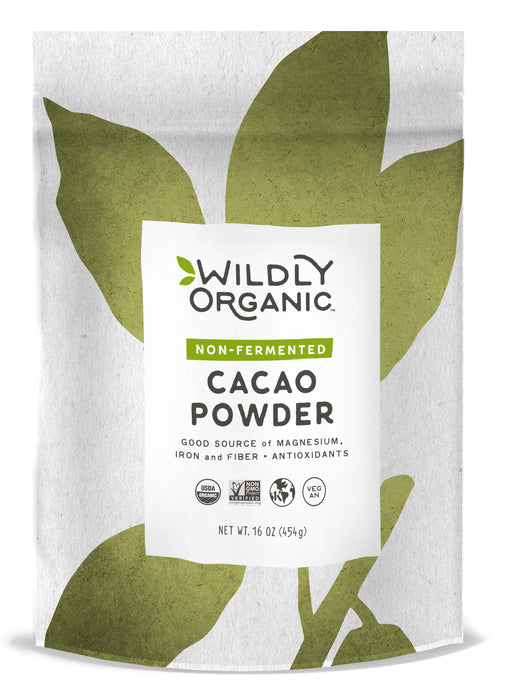
CACAOP5 Cacao Powder, Raw, Certified Organic, 5 lb. $35.00
CHOCS16 Chocolate Syrup, Certified Organic, Raw, Net Wt. 20 oz. $11.95
PailOpener Pail Opener, Food Grade Plastic (for 1 and 5 gallon plastic buckets) $4.95
CACAOP1 Cacao Powder, Raw, Certified Organic, 1 lb. $12.95
OOC750 Olive Oil, Raw Certified Organic, Extra Virgin, Centrifuged, Filtered, 750 ml $18.75


SSL Certificate Authority