
Fermented Cacao Nibs | Organic
Raw cacao nibs are the "raw material" for making both cacao powder and cacao butter. They are the raw, fermented cacao bean that has had the outer peeling removed. What’s left is a small nib of deliciousness that we know you’ll absolutely love. You may not have known where to buy cacao nibs but now you know — right here at Wildly Organic.
WILDLY ORGANIC USES THE HIGHEST QUALITY CACAO NIBS
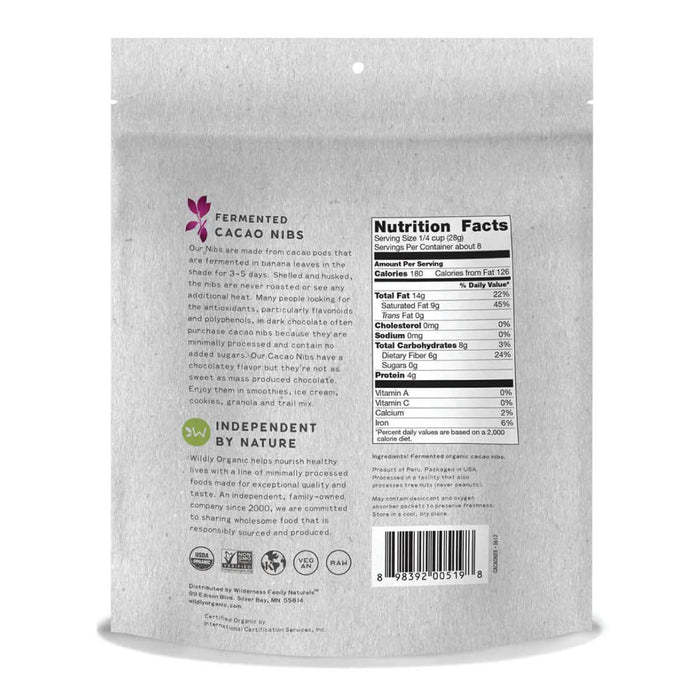
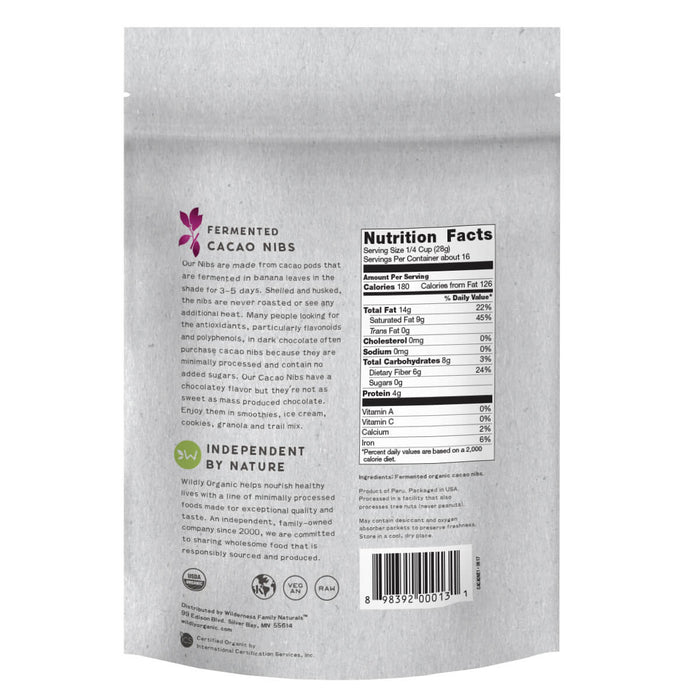
Our organic cacao nibs are made from cacao pods that are naturally fermented in banana leaves in the shade for three to five days. Shelled and husked, the nibs are never roasted or exposed to any additional heat so they maintain their delicate flavor. These cacao nibs come from beans raised organically without the use of pesticides, herbicides, or chemicals of any kind. They are also purchased as fair trade from Peru.
Our raw cacao nibs from Peru are of the Trinitario variety. The soil and climate of the region are known to lend a richer, dark brown color to its cacao nibs. Their flavor is also more intense, and there is almost a faint coffee-like flavor to them besides the light chocolate taste. Most of our customers agree that the overall taste of cacao nibs is not as sweet as chocolate, yet they’re just as delicious.
DELICIOUS AND NUTRITIOUS
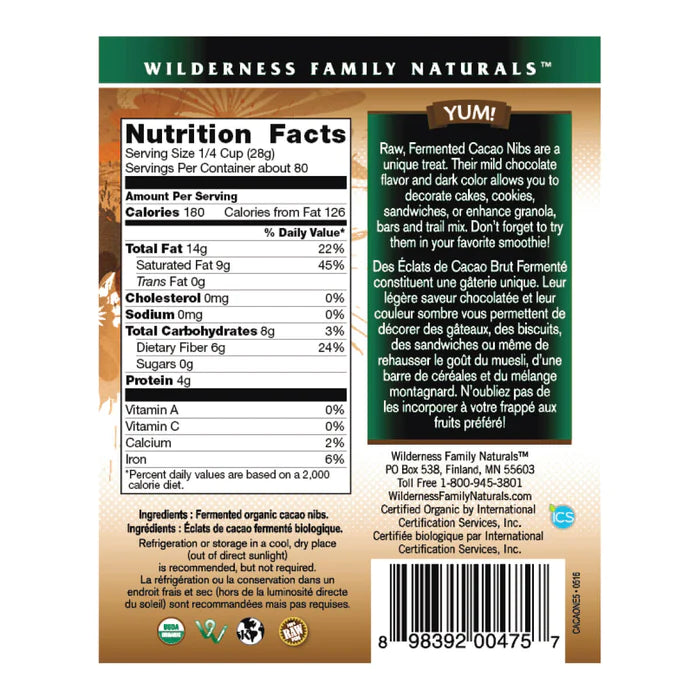
Many people looking for the antioxidants, particularly flavonoids and polyphenols, in dark chocolate often purchase organic cacao nibs because they are minimally processed and contain no added sugars. Cacao is also an excellent source of fiber, protein, and healthy fat. When combined with such a low amount of natural sugar, it’s a phenomenal snack that can help you feel full without even a twinge of guilt.
You can use raw cacao nibs in a multitude of ways in the kitchen. Enjoy them as a flavor and texture enhancer in smoothies, ice cream, cookies, granola, hot cereal, or trail mix. They can be used as a chocolate chip substitute for cookies, though they are firmer and will not melt at the same temperatures. You can even use them as tasty toppings for cakes and other confectionery.
Hot brewed cacao is also often used as a coffee replacement since it has a mocha-like quality without giving you the jitters. Roast them in your oven for 10 to 15 minutes at 350 degrees and you’ve nibs that are ready to grind just like coffee beans.
CHOOSE WILDLY ORGANIC FOR YOUR CACAO NIBS
Wildly Organic helps nourish healthy lives with minimally processed foods made for exceptional quality and taste. An independent, family-owned company since 2000, we are fully committed to sharing wholesome food that is responsibly sourced and produced. You’ll find a full range of natural products that you can feel good about using daily. No need to wonder where to buy cacao nibs — you’ve found the perfect place!
Have questions about any of our products? Wildly Organic is glad to help! Contact our customer service team today.
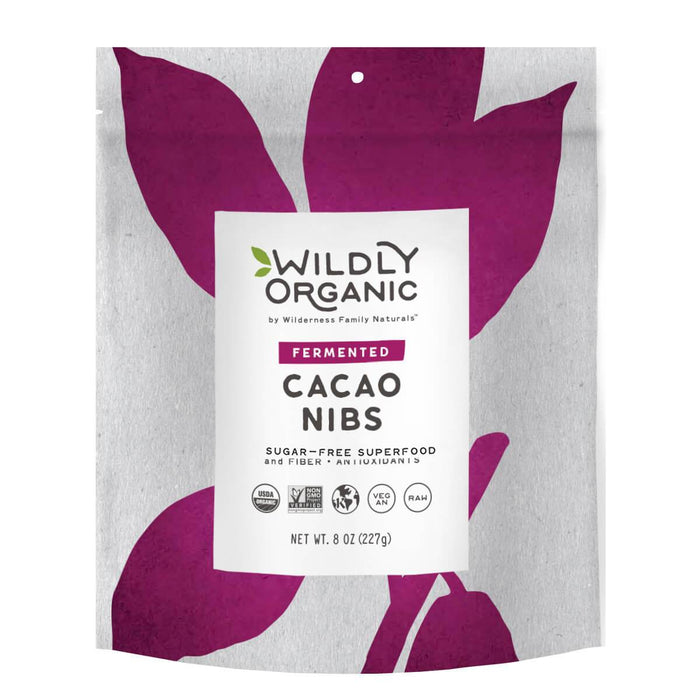
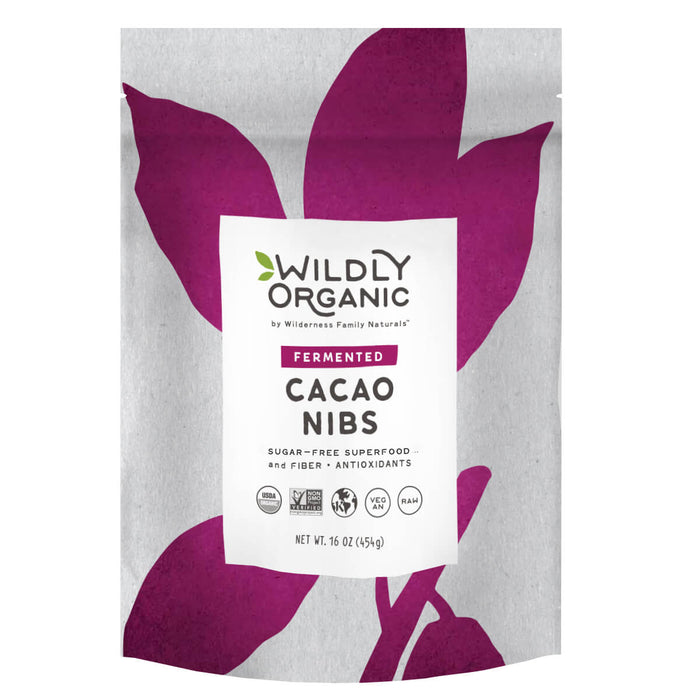
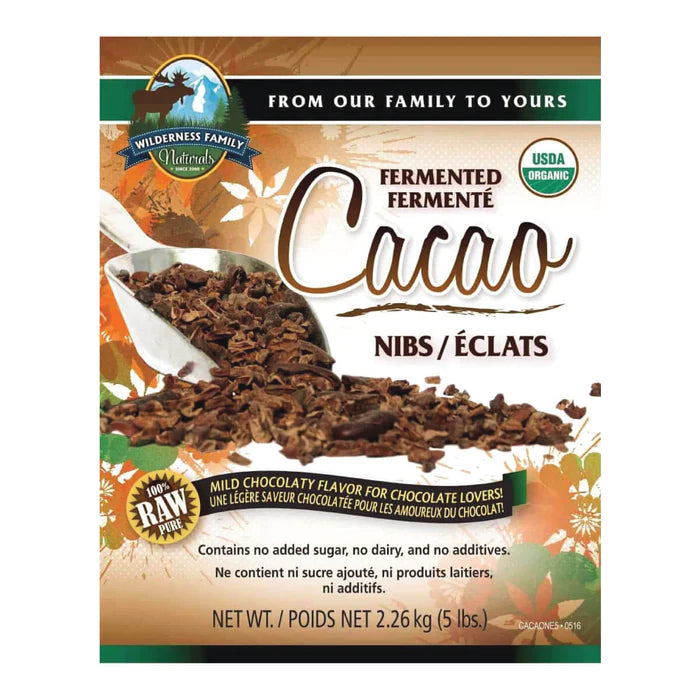
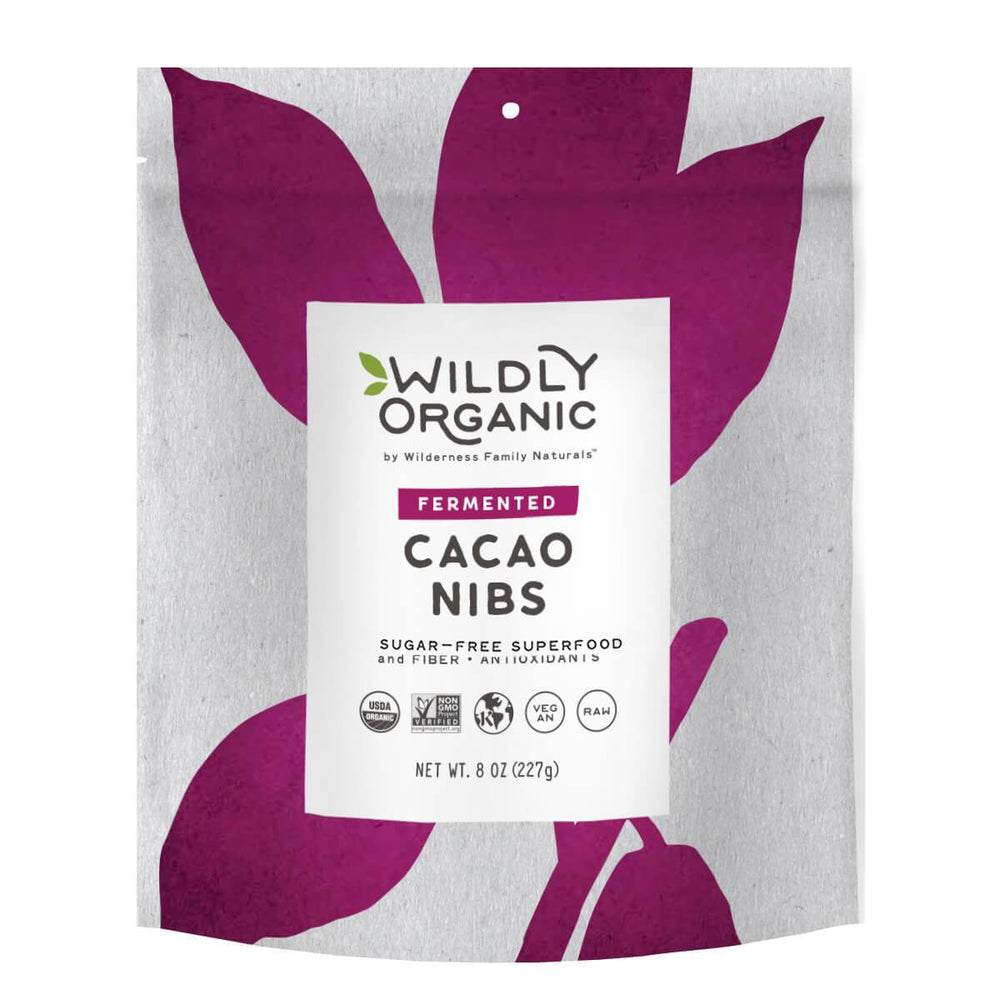
Wildly Organic Fermented Cacao Nibs arrive ready-to-use in 8 ounce and 16 ounce (updated Wildly Organic branding) or 5 pound (silver Wilderness Family Natural branded) vapor-barrier, resealable packaging to maintain freshness. All packaging includes an oxygen absorber.


- United States (Grown in Peru)
- Arsenic 0.009 ppm
- Cadmium 0.371 ppm
- Lead 0.024 ppm
- Mercury <0.001 ppm